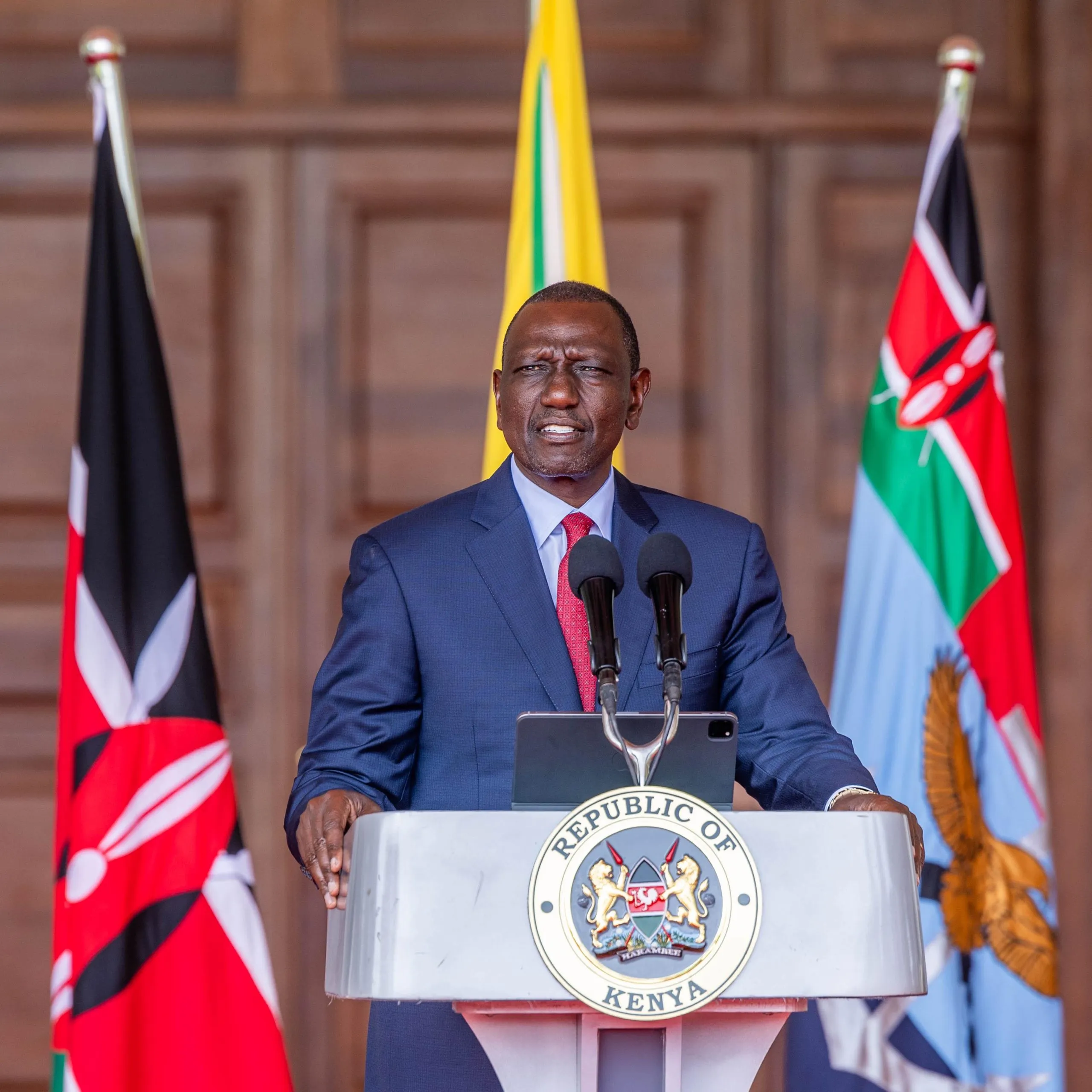
How President Ruto became a diplomatic heavyweight abroad while his regime crumbles at home — and why both superpowers are backing away
By CPN Diplomatic correspondent
Two and a half years into his presidency, William Ruto has pursued an ambitious foreign policy agenda that has positioned Kenya as a key player on the global stage while simultaneously grappling with domestic unrest that threatens to undermine his international standing.
His administration’s diplomatic efforts present a complex picture of strategic victories shadowed by concerning governance challenges that risk Kenya’s hard-earned international reputation.
The Haiti Mission that Elevated Kenya’s Global Profile
Perhaps Ruto’s most audacious foreign policy move has been Kenya’s willingness to lead the Multinational Security Support Mission to Haiti.
When the UN Security Council approved the deployment in October 2023, Kenya stepped forward as a responsible member of the international community, with Ruto personally advocating that Haiti “deserves better from the world.”
The deployment of 400 Kenyan police officers to Haiti in June 2024 marked Kenya’s emergence as a significant contributor to international peacekeeping beyond Africa.
This initiative demonstrated President Ruto’s vision of Kenya as a global security partner, not merely a regional player.
His openness to converting the mission into a full UN peacekeeping operation shows strategic thinking about long-term engagement and institutional partnerships.
However, the mission has faced domestic criticism over the distance, language barriers, and resource allocation, raising questions about whether Kenya’s limited resources are being stretched too thin.
US Relations as The Crown Jewel Achievement
Ruto’s cultivation of US relations represents his clearest foreign policy triumph.
Biden’s designation of Kenya as a major non-NATO ally elevated Kenya to an exclusive club of strategic partners, positioning the country as America’s primary African ally.
The focus on increasing US investment through the renewal of AGOA and the Strategic Trade and Investment Partnership demonstrated President Ruto’s understanding that economic diplomacy must drive foreign relations.
His state visit to Washington in May 2024 yielded tangible results, with commitments to boost trade and investment partnerships.
This relationship has provided Kenya with enhanced access to US markets, technology, and diplomatic support at international forums.
Modernizing Kenya’s Diplomatic Framework
The launch of Kenya’s updated Foreign Policy Framework in December 2024 represents a significant institutional achievement, broadening the scope to address emerging global priorities including global health, STEM, and sustainable development.
The policy’s alignment with the Bottom-Up Economic Transformation Agenda shows Ruto’s attempt to integrate domestic economic priorities with international engagement.
This strategic document positions Kenya to engage more effectively with contemporary global challenges while maintaining its traditional focus on regional leadership and South-South cooperation.

The Protest Crisis that is Damaging Kenya’s Democratic Brand
Ruto’s foreign policy successes have been severely undermined by his administration’s heavy-handed response to domestic protests.
The public unrest has challenged Kenya-US relations over governance and human rights issues, threatening to erode the goodwill built through diplomatic initiatives.
Ruto’s characterization of protesters as “treasonous” and “criminals,” along with his directive to security forces to “deploy all measures,” culminating in the use of live ammunition against demonstrators, has damaged Kenya’s reputation as a stable democracy.
This authoritarian response contradicts the democratic values that underpin Kenya’s partnerships with Western allies.
The Disconnect Between Foreign Success and Domestic Legitimacy
The most glaring failure in Ruto’s foreign policy approach has been his inability to translate international achievements into domestic support.
While he secured major diplomatic wins, his growing unpopularity at home has begun to tarnish his camaraderie with Western partners, who increasingly view him through the lens of democratic backsliding rather than strategic partnership.
This disconnect raises fundamental questions about the sustainability of Kenya’s foreign policy gains when they are built on a foundation of domestic instability and questionable governance practices.
Regional Diplomatic Confusion
The emergence of a “quiet diplomatic power struggle” between Ruto and former President Kenyatta over DRC peace efforts reveals institutional confusion in Kenya’s regional diplomacy.
This lack of coherent leadership in traditional areas of Kenyan influence—East African diplomacy and conflict resolution—suggests that President Ruto’s global ambitions may be coming at the cost of regional leadership.
The China Gambit and Playing Both Sides of the Superpower Divide
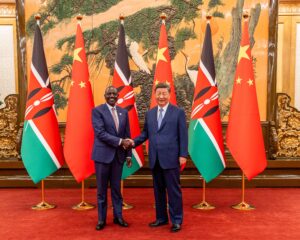
Ruto’s most controversial foreign policy maneuver came during his April 2025 state visit to China, where he declared at Peking University that “Kenya and China are not merely trade partners; we are co-architects of a new world order—one that is fair, inclusive, and sustainable.”
This statement, delivered while criticizing current global governance structures as “broken” and “dysfunctional,” represented a dramatic shift in tone from his careful diplomatic balancing act.
The visit resulted in over 20 bilateral agreements and positioned Kenya more firmly within China’s sphere of influence, challenging the notion that Kenya could successfully maintain equidistance between the superpowers.
Congressional Backlash that is Testing President Ruto’s Alliance Loyalty
The reaction from Washington was swift and severe. Senator Jim Risch, Chairman of the Senate Foreign Relations Committee, declared that Ruto’s remarks showed “not just alignment to China; it’s allegiance,” and called for a reassessment of the US-Kenya relationship, describing Ruto’s China comments as “stunning.”
Senator Risch submitted the transcript of Ruto’s speech into the Senate record and questioned whether the US could rely on leaders who “embrace Beijing so openly.”
This congressional pushback threatens to undermine the very foundation of Ruto’s signature foreign policy achievement—the major non-NATO ally status—barely a year after it was granted.
The timing is particularly problematic as it coincides with domestic instability, creating a perfect storm that could derail Kenya’s privileged relationship with its most important Western partner.
The Trump Challenge Testing Kenya’s Diplomatic Resilience
With Trump’s return to the presidency, Kenya’s special relationship with the US faces uncertainty, as previous designations may not carry the same weight under a new administration.
This development will test whether President Ruto’s diplomatic investments were built on personal relationships or institutional foundations.
Is the Promise Shadowed by Peril?
President Ruto’s foreign policy presents a paradox of ambitious vision constrained by governance failures.
His strategic thinking about Kenya’s global role—from Haiti to Washington—demonstrates sophisticated diplomatic planning and successful execution.
The elevation of Kenya-US relations and the modernization of diplomatic frameworks represent genuine achievements that could serve Kenya well for decades.
However, these successes are increasingly overshadowed by domestic authoritarianism that threatens to undermine Kenya’s international standing.
The violent suppression of protests and the growing disconnect between international partnerships and domestic governance create a dangerous dynamic where foreign policy gains could be quickly reversed.
Ruto’s challenge moving forward is to demonstrate that Kenya can be both a reliable international partner and a functioning democracy.
His foreign policy successes have raised expectations globally, but his domestic failures have raised concerns about Kenya’s democratic trajectory.
The ultimate test of his diplomatic legacy will be whether he can sustain international partnerships while addressing the governance deficits that threaten to derail his ambitious global agenda.
Kenya’s foreign policy under Ruto shows what is possible when a leader thinks strategically about global engagement, but it also demonstrates the fragility of diplomatic achievements when they are not grounded in legitimate domestic governance.
The coming years will determine whether Ruto can reconcile his global ambitions with the democratic expectations of the Kenyan people—and of Kenya’s international partners.


Ray ID: 8f3a2c1b9d4e5f6a · Performance & security by Cloudflare
site-verification-ok