MWANZA, Tanzania, July 29, 2025 – As East Africa experiences its fastest urban expansion in history, Lake Victoria has become an unintended laboratory measuring the true cost of rapid development, with new scientific data revealing that the region’s largest freshwater body is struggling to keep pace with the demands of 40 million people.
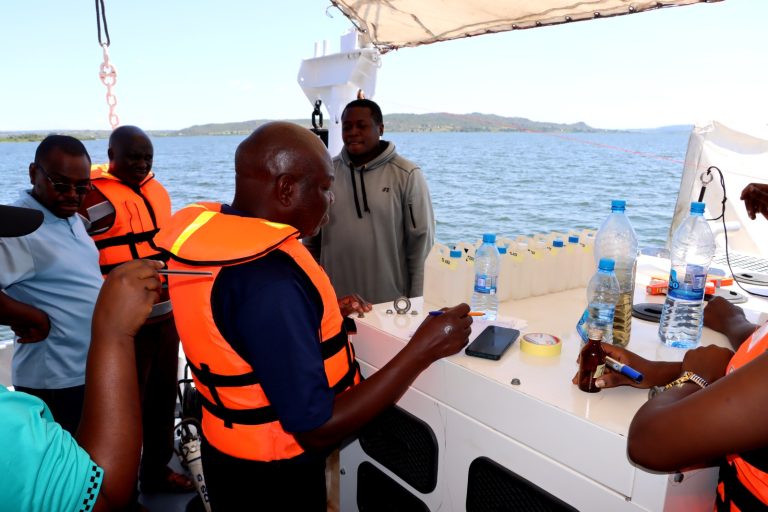
A comprehensive month-long study commissioned by the Lake Victoria Basin Commission (LVBC) across 44 sites in Kenya, Uganda, and Tanzania has exposed a critical disconnect: while cities around the lake have doubled in size over the past two decades, their waste management and water treatment infrastructure has remained largely static.
The result is a lake under siege, with nearshore waters showing alarming contamination levels from untreated wastewater, agricultural runoff, and industrial discharge – a pattern being replicated across urban water bodies throughout sub-Saharan Africa.
“What we’re seeing in Lake Victoria is not unique to this region,” explains Eng. Simon Otoung, LVBC’s Water Resources Management Officer. “It’s a preview of what happens when African cities grow faster than their ability to manage environmental impacts.”

The study’s findings reveal elevated nitrogen and phosphorus levels triggering massive algal blooms, while chemical oxygen demand readings indicate severe organic pollution in urban zones. Heavy metals including mercury, arsenic, and lead were detected at selected hotspots, painting a picture of cities literally poisoning their primary water source.
Dr. Benjamin Kyalo, Kenya’s Deputy Director of Water Resources, notes that Kisumu’s rapid expansion from a small port town to a regional hub exemplifies the challenge. “Our infrastructure planning assumed gradual growth. Instead, we got an urban explosion that our systems simply cannot handle.”
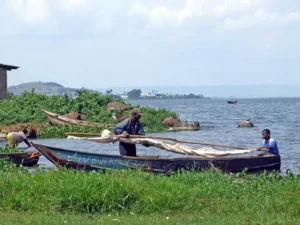
The economic implications extend far beyond environmental concerns. Fish populations have begun migrating away from polluted near shore areas, forcing fishing communities to venture further into the lake at greater cost and risk. This displacement threatens food security for millions while undermining traditional livelihoods that have sustained communities for generations.
“We’re witnessing the early stages of environmental refugees within our own waters,” says Dr. Obubu Peter, Uganda’s Assistant Commissioner for Water Quality. “First the fish move, then the fishermen follow, and eventually entire coastal economies collapse.”
The crisis reflects a broader continental challenge where rapid urbanization outpaces infrastructure development. Cities like Kampala, Kisumu, and Mwanza have seen their populations surge by over 300 percent since 2000, yet their water treatment capacity has expanded by less than 50 percent.
Tanzania’s Assistant Director Monica Mushi emphasizes the transboundary nature of the crisis. “Pollution doesn’t respect borders. Uganda’s untreated sewage becomes Tanzania’s fishing problem. Kenya’s industrial runoff affects Ugandan water quality. We’re all downstream from each other.”
The timing of this crisis is particularly critical as East Africa positions itself as a hub for manufacturing and agriculture. The region’s ambitious industrialization plans could either exacerbate the pollution crisis or serve as a catalyst for innovative environmental solutions.
Cosmus Muli from the German Development Agency, which supported the study, sees an opportunity for Africa to leapfrog traditional development mistakes. “Lake Victoria could become a model for sustainable urban growth if regional leaders act decisively now.”
LVBC Executive Secretary Dr. Masinde Bwire frames the challenge as a defining moment for East African integration. “This crisis demands the kind of regional cooperation that could set a precedent for how Africa manages shared resources in the 21st century.”
The study’s data will inform the 2025 State of the Lake Victoria Basin Report, but experts warn that without immediate action, the lake’s degradation could accelerate beyond the point of practical remediation.
As Africa’s urban population is projected to triple by 2050, Lake Victoria’s struggle serves as both a warning and a test case for whether the continent can achieve prosperity without sacrificing its most vital natural resources.


Ray ID: 8f3a2c1b9d4e5f6a · Performance & security by Cloudflare
site-verification-ok