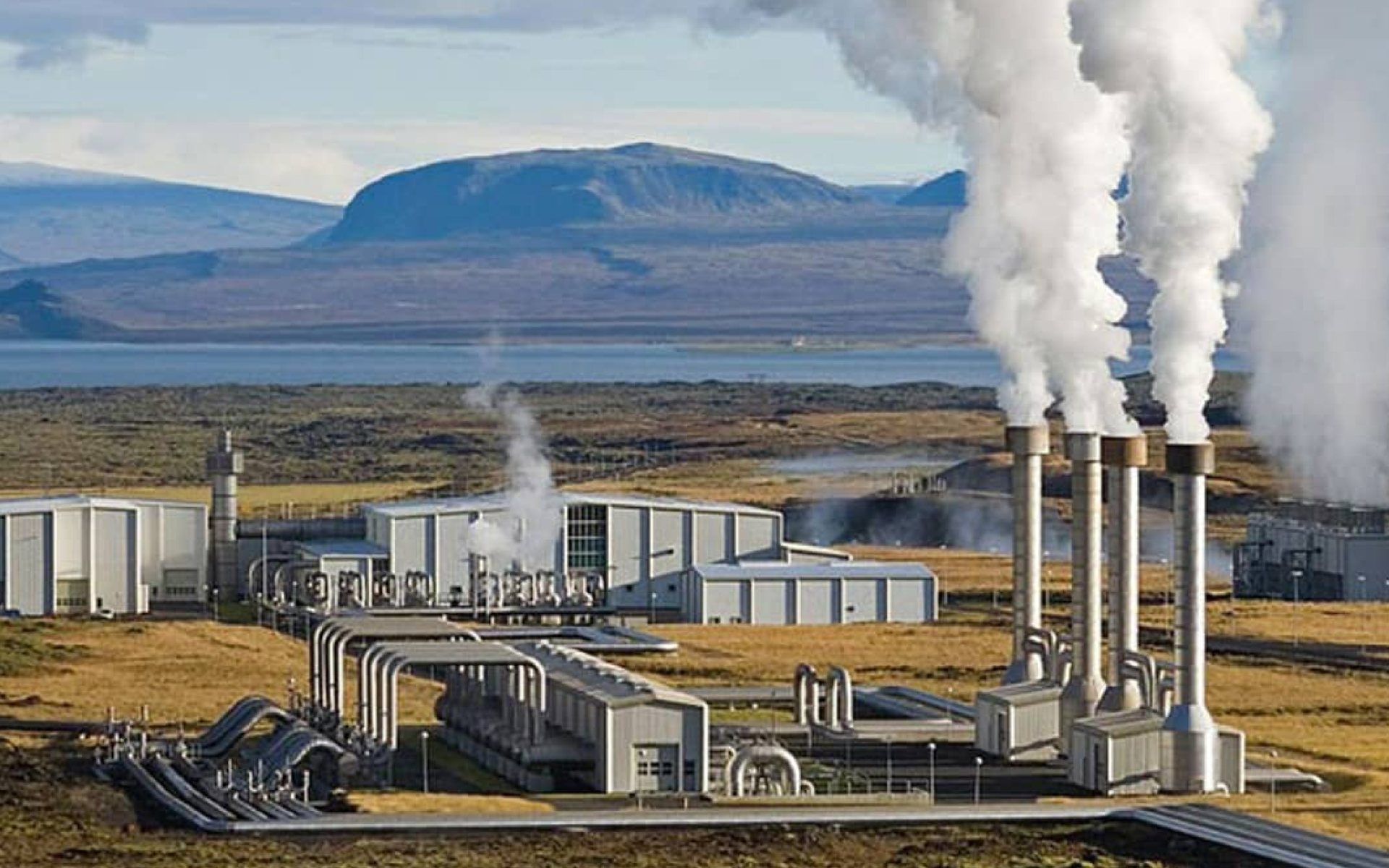
Nairobi Kenya – Kenya is on the verge of delivering what could be Africa’s most dramatic industrial energy transformation, with geothermal power plants set to slash electricity costs by up to 70% in 2026 – a game-changing development that could reshape manufacturing competitiveness across the continent.
The Geothermal Development Company (GDC) announced that two major power plants at Menengai Crater will come online in Q1 2026, potentially dropping industrial electricity costs from current rates of KSh 25.1 per kWh to just KSh 8 – addressing what manufacturers have called a crippling cost burden that has made Kenyan industry globally uncompetitive.
Kenya’s manufacturing sector has been hemorrhaging competitiveness as electricity costs for cement manufacturers surged 58.9% from KSh 15.8 in January 2021 to KSh 25.1 in January 2024. The crisis has forced manufacturers to demand government intervention, with industry leaders calling for cost reductions of up to KSh 9 per kWh to remain viable.
The timing of the geothermal breakthrough is critical. Kenya Power has warned of potential 30% increases in electricity prices, while temporary tariff cuts of up to 14% in 2024 were attributed to currency strengthening and lower fuel prices – factors that remain volatile and unpredictable.
The Menengai project represents over $250 million in committed foreign investment, with London-based Globeleq’s Quantum Power East Africa (60% complete) and New York-based OrPower 22 (50% complete) racing to complete their 35MW plants. Combined with operational Sosian Energy, the three facilities will inject 105MW of baseload power at unprecedented low costs.
“We are targeting industrial parks with tariffs at just 7 cents per kWh – among the lowest globally,” said Eric Wamanji, GDC’s Deputy Manager for Corporate Communications. At current exchange rates, this translates to roughly KSh 8 per kWh compared to industrial rates exceeding KSh 25 – a potential 68% cost reduction.
The energy cost advantage positions Kenya to capture manufacturing investment that has been flowing to countries with cheaper power. Increased domestic manufacturing would provide support to the weakening Kenyan shilling and increase employment opportunities locally, addressing twin economic challenges.
Direct-use geothermal applications amplify the competitive advantage. Steam-heated industrial processes can reduce costs by 40-70% for manufacturing applications including food processing, textiles, and chemicals. GDC’s demonstration projects show geothermal milk pasteurization cutting heating costs by 70%, while greenhouse operations reduce production costs by 40%.
Kenya’s geothermal infrastructure provides unmatched reliability compared to other African energy sources. Unlike hydropower (which varies with rainfall) or solar/wind (which require storage), geothermal provides 24/7 baseload power. Kenya’s electricity networks face substantial losses estimated at 23% in 2023, but geothermal plants can be located near industrial facilities, minimizing transmission losses.
The scale potential is massive. With 7,000MW of proven geothermal capacity and current utilization below 700MW, Kenya could theoretically power industrial operations across East Africa. GDC’s 10-year plan targets 1,065MW additional capacity, enough to supply major industrial corridors.
The project’s financial structure addresses historical funding challenges. GDC, which has relied on government funding, projects initial annual revenues of KSh 1 billion from steam sales, targeting financial sustainability by 2029. The 25-year power purchase agreements with independent power producers provide predictable revenue streams.
Industrial steam sales offer additional revenue diversification. Companies can access geothermal steam within a 10km radius of facilities, with transportation via pipeline infrastructure. This creates opportunities for industrial clusters around geothermal sites, similar to petrochemical complexes around refineries.
Kenya’s geothermal success contrasts sharply with the rest of Africa, where Ethiopia manages just 7MW of geothermal capacity. The achievement elevates Kenya to 5th globally in geothermal generation, ahead of established players like Mexico (900MW) and Italy (800MW).
Kenya introduced regulations in 2024 to open transmission and distribution networks to private investment, fostering competition and efficiency, creating a regulatory environment that supports the geothermal expansion.
The Q1 2026 timeline creates urgency for industrial planning. Companies evaluating African manufacturing locations now have clear visibility on Kenya’s energy cost advantage. The combination of dramatically lower electricity costs, industrial steam availability, and reliable baseload power creates a compelling value proposition for energy-intensive industries.
With annual fuel savings of KSh 13 billion and elimination of KSh 45 billion in diesel imports, the project delivers both cost reduction and energy security – positioning Kenya as the continent’s most attractive manufacturing destination for industries dependent on reliable, low-cost energy.


Ray ID: 8f3a2c1b9d4e5f6a · Performance & security by Cloudflare
site-verification-ok