
By TCPN Health Reporter
WHO. The World Health Organization today released groundbreaking guidance that could transform how millions of women experience pregnancy and childbirth worldwide.
The new recommendations call for countries to adopt and expand midwifery models of care, where midwives serve as the main care providers for women and babies throughout pregnancy, childbirth, and the postnatal period.
The timing couldn’t be more critical. Despite decades of progress, maternal and newborn deaths remain unacceptably high, particularly in low-income and fragile settings.
But the WHO’s new guidance offers hope: recent modeling suggests that universal access to skilled midwives could prevent over 60% of these deaths, potentially saving 4.3 million lives annually by 2035.
At the heart of the WHO’s recommendations lies a simple but powerful concept: strong communication and partnership between women and midwives.
The evidence is compelling; Women who receive care from trusted midwives are statistically more likely to experience healthy vaginal births and report higher satisfaction with the services they receive.
“Expanding and investing in midwifery models of care is one of the most effective strategies to improve maternal and newborn health globally,” said Dr. Anshu Banerjee, Director for Maternal, Newborn, Child and Adolescent Health and Ageing at WHO.
“These approaches improve outcomes, maximize resources, and can be adapted to all countries. Crucially, they also enhance women’s and families’ experiences of care—building trusted partnerships for health at this critical life stage.”
The WHO guidance represents a significant shift toward humanizing childbirth. Midwifery care models emphasize informed choice, communication, and non-invasive techniques that empower women rather than simply managing their births.
These approaches include encouraging mobility during labor, providing breathing guidance, supporting varied birthing positions, and offering emotional support throughout the process.

This philosophy directly addresses a growing global concern: over-medicalization in childbirth. While medical interventions such as cesarean sections, inductions, and use of forceps are essential and life-saving when clinically indicated, their routine or excessive use creates both short and long-term health risks. The statistics are alarming—in some countries, cesarean rates now exceed 50%, suggesting widespread use of medically unnecessary procedures.
“Skilled midwives help women trust in their bodies, their abilities, and their care,” said Ulrika Rehnstrom Loi, Midwifery expert at WHO and technical lead for the guidance.
“This is why investing in midwifery models of care is so important—it not only improves health but builds a cadre of experts equipped to provide individualized, respectful care, ensuring women are consistently part of decision making and have access to the information they need as well as vital emotional support.”
The WHO guidance goes beyond philosophy to provide practical tools and real-life examples for countries ready to make the transition.
Implementation requires strong political commitment, strategic planning, and long-term financing with dedicated budget lines. Equally important is ensuring high-quality midwifery regulation and education that meets international standards and supports autonomous, evidence-based practice.
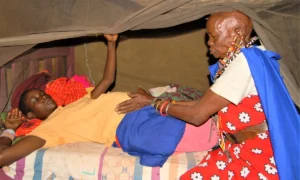
Successful implementation demands collaboration rather than competition. The guidance emphasizes that midwives should be empowered to work independently while remaining integrated into broader healthcare teams alongside doctors and nurses. When complications arise, midwives must be able to work in partnership with other professionals to ensure quality multidisciplinary care for every woman and baby.
The urgency of this guidance becomes clear when examining global statistics. Millions of women still give birth without a skilled health worker by their side, and one-third do not receive even four of WHO’s recommended eight pregnancy checks.
Perhaps most troubling, progress in reducing maternal and newborn mortality has largely stagnated since 2016.
“Midwifery models of care are not just smart solutions—they are a necessity,” said Anna Ugglas, Chief Executive of the International Confederation of Midwives, which supported the development of the guidance.
“In a world where childbirth is increasingly medicalized, they offer a person-centered, evidence-based approach that respects the physiological process of birth, restores dignity and autonomy to maternity care, and helps ensure safety for women and newborns everywhere.”
The WHO guidance outlines several adaptable models that countries can implement based on their specific contexts and resources:
- Continuity of care ensures women are supported by a known midwife, or small team of midwives, throughout pregnancy, birth, and the postnatal period. This model builds the trust relationships that prove so crucial to positive outcomes.
- Midwife-led birth centers are dedicated facilities where midwives provide care during labor and delivery for women at low risk of complications. These centers sometimes expand to offer additional services such as antenatal and postnatal care or family planning.
- Community-based approaches bring midwifery services directly to where women live and work, delivered through mobile units or local health centers. This model addresses geographic barriers that prevent women from accessing skilled care.
- Private practice allows private midwives to operate independently or through organizations. To be effective, these services must be properly regulated and integrated into national health systems.
The release of this guidance marks a pivotal moment in global maternal health. For the millions of women who will give birth in the coming years, the difference between life and death, between trauma and empowerment, may well depend on how quickly the world embraces the WHO’s call for expanded midwifery care.


Ray ID: 8f3a2c1b9d4e5f6a · Performance & security by Cloudflare
site-verification-ok