By James Mwangi
DISCLAIMER: THE ARTICLE IS BASED ON A COURT CASE. THE STORY DETAILS HAVE BEEN RECREATED TO FIT THE OBJECTIVES OF THE NEWS ARTICLE.
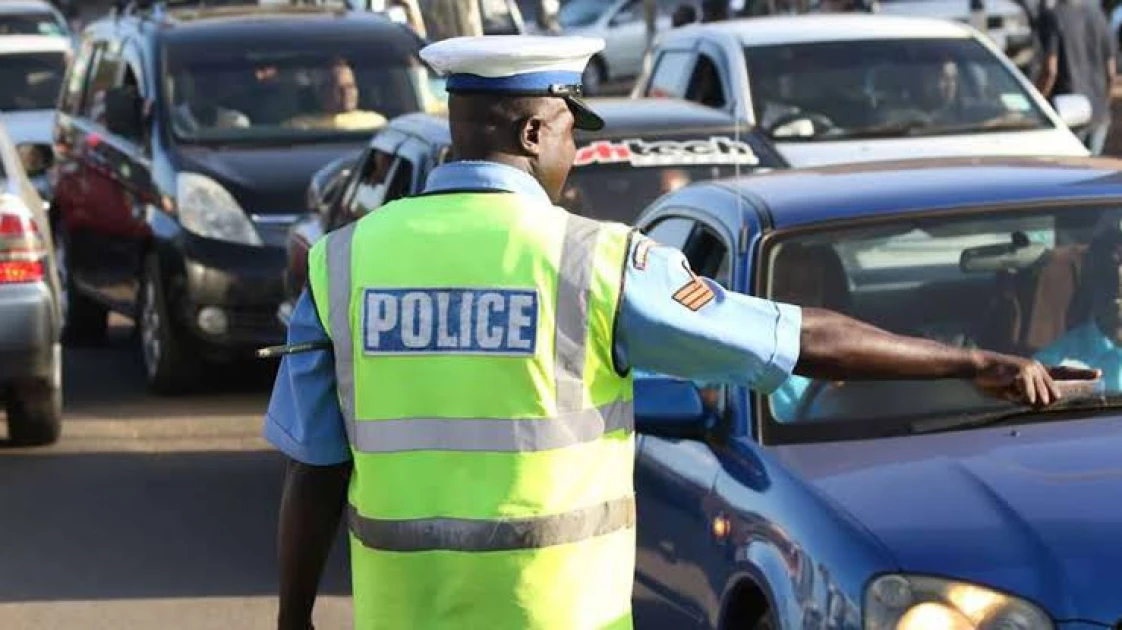
Nairobi, June 19, 2025, Paul Njung’e Gikaru still remembers the exact date, sometime in 2020 when police officers knocked on his door. They had come for his Toyota Fielder, the silver sedan he had bought legitimately from Timothy Muiga and registered properly with the National Transport and Safety Authority (NTSA).
“They said there was a problem with my registration number,” recalls Gikaru, a soft-spoken man in his forties whose weathered hands tell the story of years spent working to make ends meet. “I thought it would be sorted out in a few weeks. Maybe a month. I never imagined it would take four years of my life.”
What started as a routine investigation into duplicate vehicle registration numbers would become a bureaucratic nightmare that stripped Gikaru of his livelihood, tested his faith in Kenya’s justice system, and ultimately forced him to take the government to court just to get his own property back.
The problem began not with anything Gikaru did, but with what NTSA failed to do properly. In a stunning administrative blunder, the transport authority had issued the same registration number – KCL 498P – to two different vehicles. When this duplication was discovered in 2020, investigators immediately suspected fraud.

“You have to understand, at that time I didn’t even know what ‘duplicate registration’ meant,” Gikaru says, sitting in the small office where he now works, having lost the taxi business that once sustained his family. “All I knew was that the police had taken my car and were treating me like a criminal.”
The Toyota Fielder wasn’t just a vehicle to Gikaru – it was his lifeline. Like thousands of Kenyans who depend on the matatu and taxi industry for their daily bread, the car represented years of savings, hope for the future, and the primary source of income for his family.
“That car was putting food on our table,” he explains, his voice heavy with the weight of lost opportunities. “My children’s school fees, rent, everything depended on the daily earnings from that vehicle. When they took it away, they took away our survival.”
What followed was a labyrinthine journey through Kenya’s criminal justice system. The Directorate of Criminal Investigations (DCI) launched a thorough probe, examining every detail of the vehicle’s history. They scrutinized the chassis and engine numbers, investigated the previous owner Timothy Muiga, and explored whether the car had been used as collateral for fraudulent loans.
Months turned into years. Gikaru watched helplessly as his case file gathered dust while his family’s financial situation deteriorated. He sold household items to pay rent. His children had to change schools. The respect he had earned in his community as a hardworking taxi operator slowly eroded as neighbors whispered about his legal troubles.
“People started looking at me differently,” he recalls painfully. “When your car is impounded by the police for years, people assume you must have done something wrong. Some friends stopped talking to me. Some family members began to doubt my story.”
The investigation eventually revealed what Gikaru had maintained all along – that he was an innocent victim of NTSA’s administrative failure. The duplicate registration had indeed occurred due to some erasure of particulars from vehicle documents, but not through any action by Gikaru. Yet despite these findings, neither the police released his vehicle nor NTSA corrected their error.
In 2023, Gikaru’s frustration boiled over into legal action. He filed a criminal application seeking the release of his vehicle, hoping that the courts would end his ordeal. But even the judiciary initially failed him – Justice Muteti dismissed his application in November 2023, citing ongoing investigations.
“That was my lowest point,” Gikaru admits, his eyes reflecting the exhaustion of a man who had fought the system and lost. “I had spent what little savings I had left on lawyers, I had waited patiently for the investigations to finish, and still nobody would help me. I began to think I would never see my car again.”
But Gikaru’s lawyer saw something that others had missed – a clear case of administrative injustice that violated fundamental constitutional rights. The continued detention of the vehicle without criminal charges, they argued, was not just unfair but unconstitutional.
“My lawyer explained to me that this wasn’t just about my car anymore,” Gikaru says. “This was about whether the government can just take someone’s property indefinitely because of their own mistakes. He said we had to fight not just for me, but for anyone else who might face the same situation.”
On June 16, 2025, Justice R.E. Aburili of the High Court delivered a ruling that validated everything Gikaru had endured. In granting leave for judicial review, the judge acknowledged what Gikaru had been saying for four years – that the continued detention of his vehicle was “punitive and lacking any legal justification.”
The judge’s words were a balm to wounds that had festered for years: “The impounding of the vehicle has persisted for over four years, notwithstanding those investigations have not charged the Applicant or any other suspect of any wrongdoing.”
For Gikaru, the ruling represented more than legal vindication – it was recognition of his humanity and dignity after years of being treated as a mere case number in government files.
“When I heard the judgment, I cried,” he admits without shame. “Not just because I might finally get my car back, but because someone in authority had finally acknowledged that what happened to me was wrong. That I wasn’t a criminal. That I deserved better.”
The four-year ordeal has left deep scars on Gikaru and his family. His eldest daughter, who was in secondary school when the car was impounded, has since completed her education without the financial stability that taxi earnings would have provided. His wife, who had dreams of expanding their small family business, instead had to find employment as a house help to make ends meet.
“My wife never complained, but I could see the stress on her face every day,” Gikaru reflects. “She would ask me if I thought we would ever get the car back, and I would tell her yes, but inside I wasn’t sure. There were nights I couldn’t sleep, wondering if I had made the right decisions, if I should have just given up and tried to start over.”
The psychological toll extends beyond financial hardship. Gikaru describes feeling “invisible” in a system that seemed designed to ignore ordinary citizens caught in bureaucratic web. He speaks of the humiliation of repeatedly visiting government offices, only to be told to “wait a little longer” or “the file is being processed.”
“You lose faith,” he says simply. “Faith in the system, faith in justice, sometimes even faith in yourself. You start wondering if maybe you did something wrong, if maybe you deserve what’s happening to you.”
While Gikaru’s legal victory is personal, legal experts say the case has implications far beyond one man’s fight for his vehicle. The High Court’s decision signals that Kenyan courts will not tolerate indefinite administrative detention of private property, especially when the detention results from government errors.
“This case is important because it shows that ordinary citizens can challenge government overreach,” explains constitutional lawyer Sarah Kinyanjui, who was not involved in the case but has followed its progress. “Too often, people in Gikaru’s situation just give up because fighting the system seems hopeless. His persistence sends a message that constitutional rights mean something.”
The case also highlights systemic problems with Kenya’s vehicle registration system that could affect thousands of other motorists. NTSA’s failure to prevent duplicate registrations and its subsequent refusal to correct its error raise questions about the authority’s competence and accountability.
“If this can happen to Paul Gikaru, it can happen to anyone,” notes transport sector analyst James Mwangi. “How many other vehicles are sitting in police stations because of NTSA errors? How many other families have been destroyed by bureaucratic incompetence?”
As Gikaru prepares for the substantive hearing of his judicial review application, he remains cautiously optimistic. The court has given NTSA and the police clear directions to explain why they should not be ordered to issue a new registration number and release the vehicle respectively.
“I’m not celebrating yet,” he says with the wariness of someone who has learned not to trust the system too quickly. “But for the first time in four years, I feel like someone is listening. Someone understands that what happened to me was wrong.”
His immediate priority is getting back to work. The taxi industry has changed significantly during his four-year absence – ride-hailing apps have grown more popular, fuel prices have fluctuated, and new regulations have been introduced. But Gikaru is determined to rebuild what he lost.
“I’m older now, and it will be harder to start again,” he acknowledges. “But I’m not the same person who lost his car in 2020. I’ve learned about my rights. I’ve learned that you can fight the system and win, even when it seems impossible.”
NTSA officials declined to comment specifically on Gikaru’s case, citing ongoing litigation. However, the authority has recently announced plans to digitize its registration system to prevent duplicate numbers and improve efficiency.
“We recognize that there have been challenges with our registration system,” said an NTSA spokesperson who requested anonymity. “We are committed to ensuring that such situations do not occur in the future and that any existing anomalies are resolved quickly and fairly.”
The DCI also declined to comment on the case, but sources within the police service acknowledge that the prolonged detention of property without clear legal justification is problematic and contrary to constitutional principles.
Gikaru’s story resonates because it reflects a broader struggle between ordinary Kenyans and a bureaucratic system that often seems indifferent to individual suffering. His case joins a growing list of judicial review applications where citizens have successfully challenged government overreach and administrative incompetence.
“This is about more than one car or one person,” reflects Gikaru as our interview concludes. “This is about whether ordinary people matter in this country. Whether we have rights that mean something, or whether we’re just expected to suffer in silence when the government makes mistakes.”
As he speaks, there’s a determination in his voice that wasn’t there four years ago – the voice of someone who has discovered his own power to demand justice, even from the most powerful institutions in the land.
“I want other people in similar situations to know that they don’t have to accept injustice,” he says. “Yes, it’s hard. Yes, it takes time and money and emotional strength. But your rights are worth fighting for. Your dignity is worth defending.”
The Toyota Fielder KCL 498P remains in police custody as this story goes to print, but for the first time in four years, Paul Njung’e Gikaru has reason to believe he might drive it home soon. More importantly, he has helped establish a precedent that might prevent other innocent Kenyans from enduring what he has endured.
In a system that too often treats citizens as statistics, Paul Gikaru’s story is a reminder that behind every case number is a human being with dreams, dignity, and rights that deserve protection.
The substantive hearing of Paul Njung’e Gikaru’s judicial review application is expected to be heard in the coming weeks. NTSA and the police have been directed to file their responses to his application for mandamus orders.
This story is part of our ongoing coverage of constitutional rights and administrative justice in Kenya. If you have experienced similar issues with government agencies, we would like to hear from you at humanstory@thecouncilpress.com


Ray ID: 8f3a2c1b9d4e5f6a · Performance & security by Cloudflare
site-verification-ok