In the quiet corridors of Kenya’s secondary schools, a revolution is brewing. It’s not the kind that makes headlines with protests or policy announcements, but rather the quiet, methodical transformation of how an entire generation will learn, think, and prepare for careers that don’t yet exist.
As the first cohort of Competency-Based Curriculum (CBC) students prepares to transition to Grade 10 in 2026, school principals across Kenya are sounding an alarm that reveals something fascinating about educational transformation: teachers in secondary schools lack competency in three pathways for senior school.
But this isn’t just a story about unpreparedness—it’s a narrative about one of Africa’s most ambitious educational experiments.
For decades, Kenyan students followed a predictable path: excel in mathematics, sciences, and languages, then compete for university slots in traditional disciplines. The system was beautifully simple and devastatingly narrow.
Enter the CBC revolution. The three Pathways are: Arts and Sports Science, Social Sciences, Science, each designed to nurture different types of intelligence and career aspirations. Suddenly, the student who excels at community organizing has a clear academic pathway alongside the future engineer.
Senior school serves as a pre-career phase where students make informed choices based on their strengths, explains outgoing TSC boss Nancy Macharia. This isn’t just curriculum reform—it’s a fundamental reimagining of what education should accomplish.
Here’s where the story gets truly interesting. Kenya’s teachers, many of whom were trained in the traditional system, now face an extraordinary professional challenge. They must master not just new content, but entirely new ways of thinking about learning itself.
The three pathways require teachers to become educational chameleons:
- Science Pathway: Traditional STEM subjects but with applied, real-world problem-solving
- Social Sciences: Humanities subjects integrated with contemporary global challenges
- Arts and Sports Science: Creative and physical disciplines elevated to academic rigor
The principals’ warning reveals a profound truth about educational transformation: changing curriculum is relatively easy; changing minds is revolutionary work.
School heads point one major hurdle as the lack of clarity on how schools will be mapped to different academic pathways. This seemingly technical challenge masks something more profound—Kenya is essentially rebuilding its educational infrastructure while the system is running.
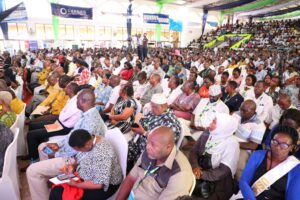
Senior schools will be categorised as either triple pathway or double pathway institutions, a shift from traditional categories that saw learners select schools. This means some schools will offer all three pathways, while others will specialize. Imagine the strategic planning required: Which pathways should a school in rural Turkana offer versus one in urban Nairobi?
For Grade 9 students across Kenya, this transition represents something unprecedented in their parents’ generation: genuine choice in their educational journey. Grade 9 students’ placement into senior schools will hinge on two main components: the KJSEA, contributing 60% of their placement criteria.
But here’s the educational innovation: the remaining 40% considers students’ interests, aptitudes, and career aspirations. For the first time in Kenya’s educational history, a student’s passion for environmental conservation or talent in digital arts can formally influence their academic placement.
Kenya’s CBC transition is being watched internationally as a test case for educational transformation in developing countries. The challenges facing Kenyan principals—teacher preparedness, infrastructure adaptation, and stakeholder buy-in—are microcosms of global educational dilemmas.
The timing is significant. As artificial intelligence transforms global job markets, Kenya is proactively creating educational pathways that emphasize critical thinking, creativity, and adaptability over rote memorization. The teachers’ “lack of competency” in new pathways isn’t a failure—it’s growing pains of an educational system evolving in real-time.
All learners must take the following the four (4) core subjects irrespective of their preferred Pathways: English, Kiswahili/Kenya Sign Language, Community Service Learning, Physical Education. Notice “Community Service Learning”—this isn’t just curriculum content; it’s a philosophy that schools exist to serve communities, not just prepare individuals for careers.
This approach transforms schools from knowledge delivery systems into community development hubs. Students in the Social Sciences pathway might tackle local water management challenges. Arts and Sports Science students could develop cultural preservation projects. Science pathway students might address agricultural innovation challenges in their regions.
The principals’ warning about Grade 10 transition preparedness reveals something beautiful about educational leadership: the willingness to acknowledge uncertainty while moving forward anyway. These school leaders are essentially saying, “We don’t have all the answers, but we’re committed to finding them alongside our students.”
This honesty is revolutionary in educational contexts where administrative confidence is often prized over adaptive learning. Kenya’s principals are modeling the very competency-based learning they’re asking students to embrace—learning through doing, failing forward, and continuous improvement.
As Kenya prepares for this historic transition, the story extends far beyond logistics and teacher training. It’s about a nation choosing to prepare its young people for a future that requires different skills, different thinking, and different ways of engaging with the world.
The “warning” from principals isn’t really a warning at all—it’s an invitation. An invitation for communities, parents, policymakers, and educators to participate in one of the most significant educational experiments of our time.
In classrooms across Kenya, the future is being written not in policy documents, but in the daily negotiations between teachers learning new pathways and students eager to explore their potential. The revolution is quiet, methodical, and absolutely transformative.
And perhaps that’s exactly how the best educational revolutions happen—one pathway, one student, one reimagined possibility at a time.


Ray ID: 8f3a2c1b9d4e5f6a · Performance & security by Cloudflare
site-verification-ok